Ever wondered what makes a drilling rig work? Without these four essential systems, your rig is just an expensive piece of metal.
A drilling rig requires four fundamental systems to operate effectively: the power system1 that generates energy, the hoisting system that moves equipment, the rotating system that drives the drill bit, and the circulating system2 that removes cuttings.
At Hardrock, I've seen how these systems work together like a well-orchestrated team. Let me break down each system and show you why they're crucial for successful drilling operations.
What Is Power System?
Having trouble understanding where your rig gets its strength? The power system is the heart that keeps everything running.
The power system consists of primary and auxiliary engines that generate the mechanical, hydraulic, and electrical power needed to operate all drilling rig components.
From my experience manufacturing rigs at Hardrock, I can tell you that the power system is like the engine room of a ship - it's where everything begins. The system typically includes:
- Primary Power Source
- Diesel engines (most common)
- Electric motors (for specific applications)
- Hybrid systems (emerging technology)
- Power Distribution
- Hydraulic pumps
- Air compressors
- Electric generators
- Control Systems
- Engine management
- Power monitoring
- Safety controls
One of our clients, Mohammed Al-Rahman in Dubai, specifically chose our rigs because of their robust power systems that can handle desert heat while maintaining consistent performance. The power system must be properly sized for the intended drilling depth and formation hardness. Too little power means inefficient drilling; too much power wastes fuel and increases wear on components.
What Is Hoisting System?
Think lifting heavy drill pipes is easy? Without a proper hoisting system3, you're going nowhere.
The hoisting system includes the derrick or mast, crown block, traveling block, drawworks, and cables that work together to lift and lower drilling equipment in and out of the wellbore.
The hoisting system is crucial for drilling operations, and at Hardrock, we pay special attention to its design. Here's what makes it work:
- Structural Components
- Mast/derrick design
- Support structure
- Guy-line systems
- Crown block assembly
- Lifting Components
- Wire ropes
- Traveling block
- Hook assembly
- Elevators
- Control Elements
- Drawworks
- Brake systems
- Emergency systems
- Safety devices
When designing hoisting systems for clients like Mohammed Al-Rahman, we consider factors such as maximum load capacity, lifting speed requirements, and safety factors. The system must handle not only the weight of the drill string but also the dynamic loads during drilling operations.
What Is Rotating System?
Wondering how the drill bit turns? The rotating system is your answer to penetrating the earth effectively.
The rotating system4 consists of components that create the turning motion needed for drilling, including the rotary table or top drive, drill string, and drill bit.
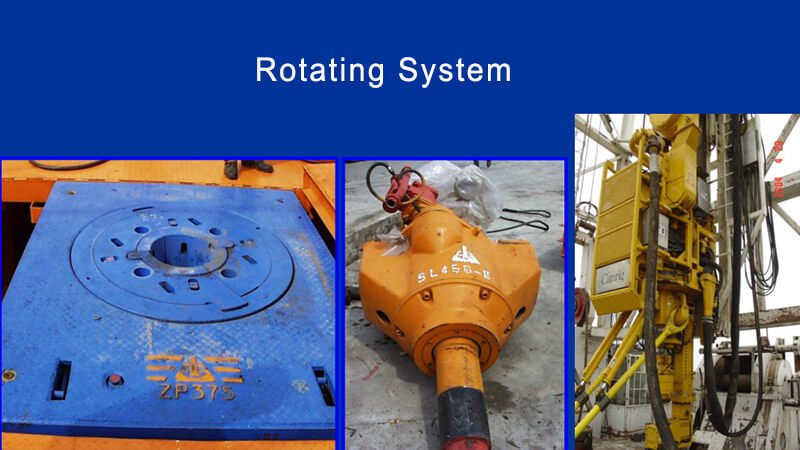
At Hardrock, we've refined our rotating systems through years of field experience. The system includes:
- Drive Mechanisms
- Top drive systems
- Rotary table setups
- Power swivels
- Hydraulic motors
- Transmission Components
- Gear boxes
- Drive shafts
- Universal joints
- Kelly bars
- Connection Elements
- Tool joints
- Drill collars
- Stabilizers
- Drill bits
Through working with clients like Mohammed Al-Rahman, we've learned that different drilling applications require specific rotating system configurations. For instance, water well drilling typically uses direct top drive systems for better control, while foundation drilling might employ rotary tables for higher torque applications.
What Is Circulating System?
Not moving drilling fluid properly? Your drilling operation could grind to a halt.
The circulating system pumps drilling fluid through the drill string, out through the bit, and back up the annulus, carrying cuttings and cooling the bit.

The circulating system is critical for successful drilling, and at Hardrock, we design ours with efficiency in mind. Here's the breakdown:
- Surface Equipment
- Mud pumps
- Mud tanks
- Mixing equipment
- Shale shakers
- Downhole Components
- Drill pipe
- Drill collars
- Bit nozzles
- Annular space
- Treatment Systems
- Settling tanks
- Desanders
- Desilters
- Mud coolers
- Monitoring Equipment
- Pressure gauges
- Flow meters
- Density sensors
- Temperature monitors
When working with Mohammed Al-Rahman's team in Dubai's desert conditions, we emphasized the importance of proper circulation system maintenance and monitoring. The extreme heat and abrasive sand require robust filtration and cooling systems to maintain optimal drilling performance.
Conclusion
These four basic systems—power, hoisting, rotating, and circulating—work together to make drilling possible. Understanding their functions helps ensure efficient and safe drilling operations.
-
Exploring the power system will give you insights into energy generation and its importance in drilling operations. ↩
-
Learning about the circulating system can help you understand how cuttings are managed during drilling, which is vital for efficiency. ↩
-
Understanding the hoisting system is essential for safe and efficient drilling operations. Explore this link to learn more about its components and functions. ↩
-
Explore this link to understand the mechanics behind rotating systems in drilling, crucial for effective earth penetration. ↩